


Christmas on Antipodes
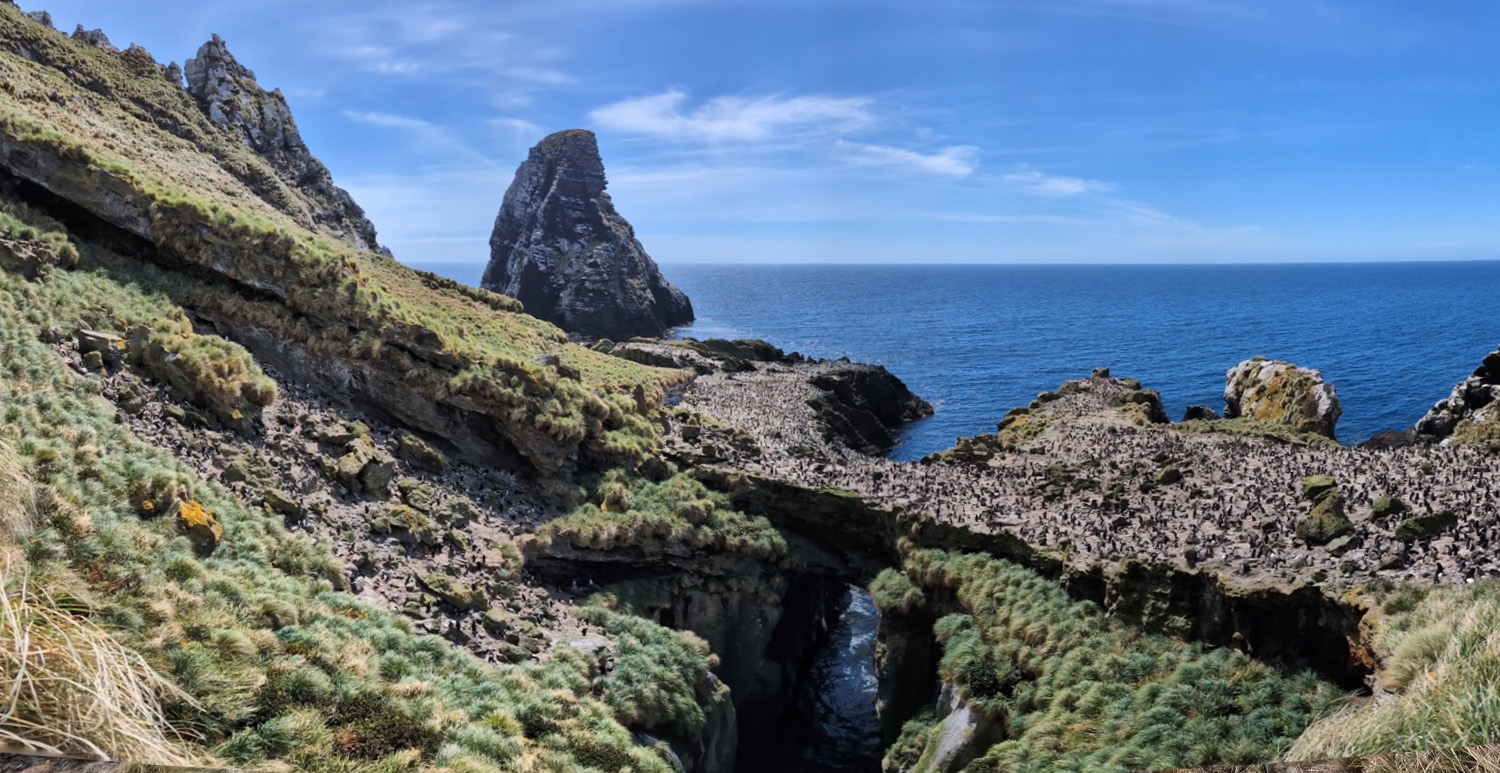
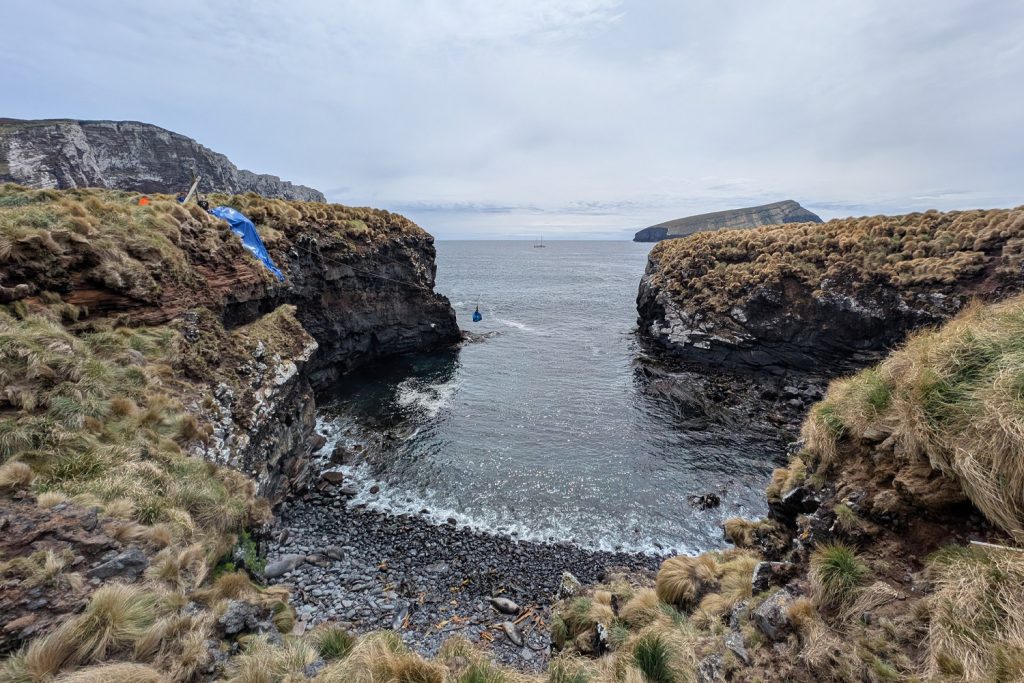
After a brief but successful visit to the Bounty Islands, our expedition team continued their journey to the ultimate destination: the Antipodes Island group. This marked the fourth visit of our five-year project, so the first glimpse of the islands wrapped in mist was a familiar one. What was also familiar – and frustrating – was the fact that landing proved impossible when Evohe reached the islands around lunchtime on 30 November. A constant northerly swell, which had already forced changes of plan at the Bounties, now caused a further two-day delay. On 2 December, conditions finally eased. Gear was hauled up the rickety-looking but well-tested flying fox, and after almost six hours of bone-breaking work to get everything up the cliff, Evohe was on her way back to the mainland, leaving a team of four on the island.
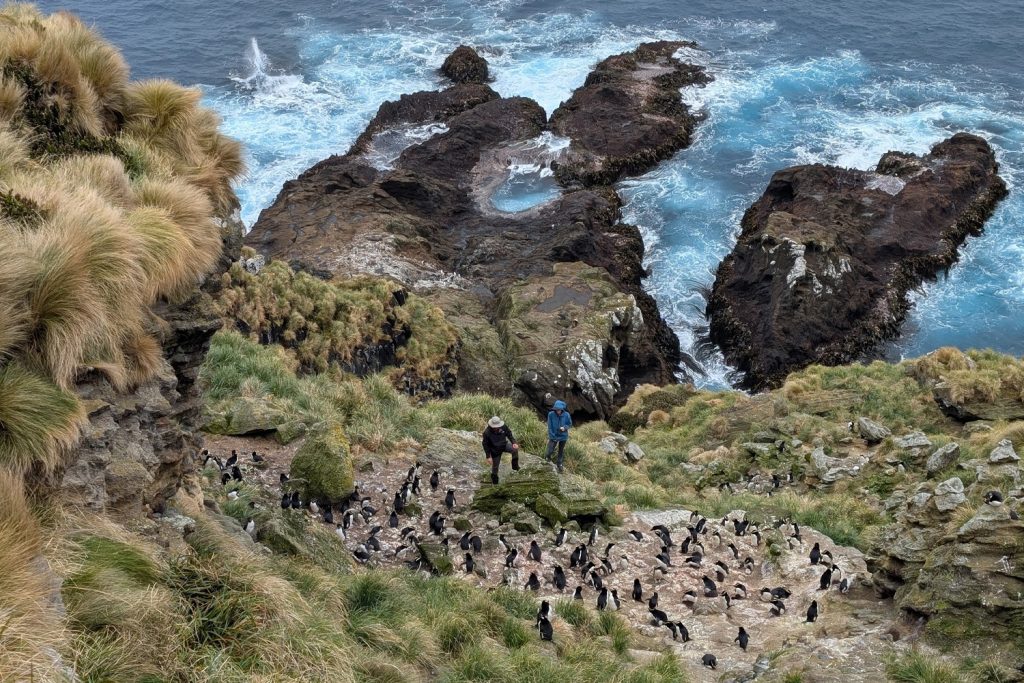
Over the first couple of weeks, the team settled into a routine of frequent chick counts in the colonies closest to the hut, while also beginning drone surveys at sites across the island. It quickly became clear that Erect-crested penguins had been badly affected by the October storms that ravaged southern New Zealand. Low-lying colonies exposed to western swell often contained only adult pairs and no chicks, suggesting that eggs had been lost when waves washed across the breeding sites. At Reef Point, only around a third of the birds were guarding chicks, and drone surveys of the beach colonies in Mirounga Bay revealed that only a tiny fraction of the penguin population had successfully bred. One unexpected exception came from a colony affected by last year’s major rockfall. Only a handful of pairs that had lost their original nest sites had resettled on top of the rockfall debris – but these birds were raising chicks. In this case, the elevated, newly formed nesting area appears to have protected them from wave wash, turning what had initially been a major disturbance into an advantage during a storm-heavy season.
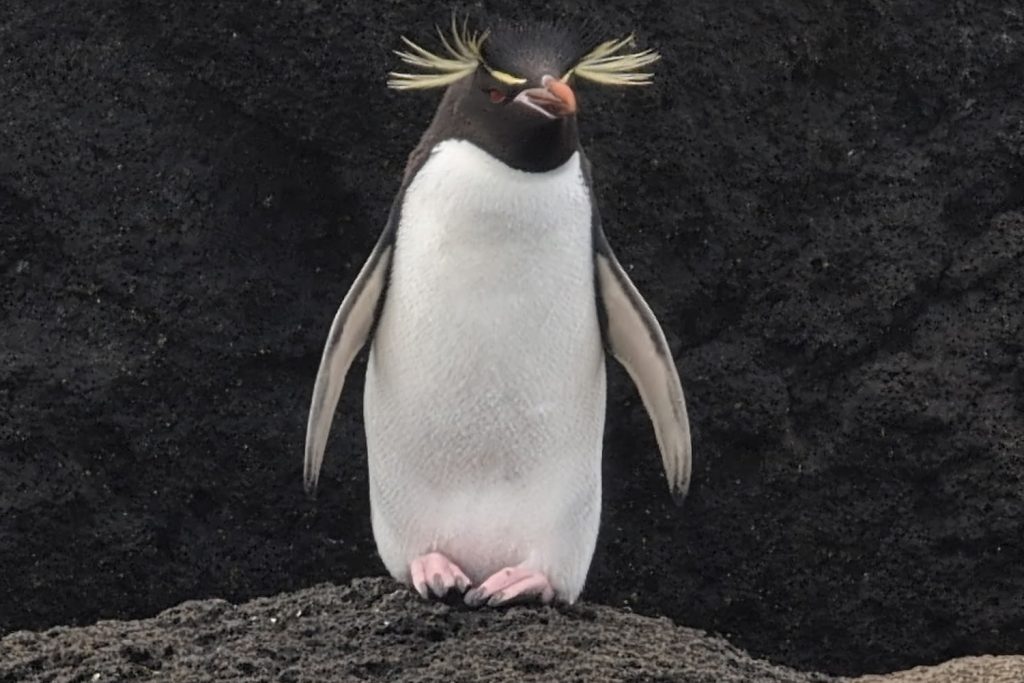
Alongside colony monitoring, the first round of GPS dive-logger deployments took place on Erect-crested penguins at Anchorage Bay, Orde Lees and Stack Bay, as well as on Eastern Rockhopper penguins at the latter site. Early deployments were all recovered successfully, although this became more difficult as chick-rearing progressed into the crèching stage and adults undertook longer foraging trips. Not all devices could be recovered, as some birds removed them during extended trips at sea. Data from the recovered loggers, however, showed foraging patterns consistent with previous years, suggesting no major change in behaviour between seasons.
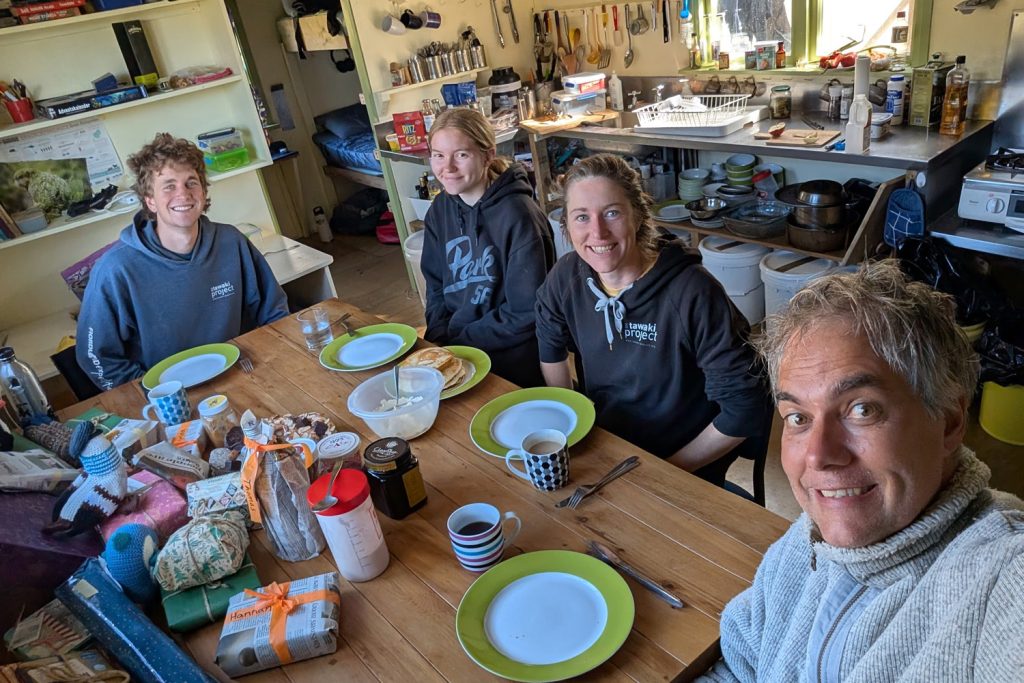
December ended with a memorable Christmas on the island. To properly “get into the mood”, the team completed a 14-hour round trip of the island to conduct drone surveys and ground counts along the entire south coast, including a visit to the archaeological site discovered last year in South Bay — the remains of the first camp of the Spirit of the Dawn castaways. After this effort, two days of rest over Christmas were very well deserved.